How To Search for Grand Rapids Property Records

Before investing in property in Grand Rapids, be sure to do your due diligence by checking property records. These records offer a wealth of information, from land ownership and tax assessments to legal filings, building permits, and other details that are helpful for making sound investment decisions. Grand Rapids property records are public records, meaning that they are available to anyone who wants to view and copy them. Knowing which office to contact is the key to a successful search. Below, we've provided a list of resources you can use to find different types of Grand Rapids property records.
Kern County Register of Deeds

The Kent County Register of Deeds is a great resource for records like deeds, mortgages, land contracts, liens, and other documents related to property ownership in the City of Grand Rapids. You can search for these documents by address or parcel number online using the Register's Property Search tool. If you prefer an in-person search, you can visit the register of deeds' office located at 300 Monroe Avenue NW, Grand Rapids, MI 49503. You can also call the office at (616) 632-7610 for inquiries.
Grand Rapids Assessor's Office

The Grand Rapids Assessor's Office is responsible for determining the value of all real property in the city for tax purposes. You can find official information on a property's size, taxable value, and sales history by visiting this office at 300 Monroe Avenue NW, Grand Rapids, MI 49503 and requesting an Assessor Record Card. Requests may also be submitted to the office online. You will typically be emailed the requested assessor's card within two business days. You can call the assessor's office at (616) 456-3081 for more information.
Grand Rapids Treasurer's Office

The Grand Rapids Treasurer's Office is an excellent resource for property records related to tax payment histories, current balances, and tax liens. You can use the Treasurer's website to estimate property taxes and make payments; the site also provides access to a third-party platform (BS&A Online) that you can use to search for information by name, address, and parcel ID. You can also visit the Treasurer's office at Suite 220, 300 Monroe Avenue NW, Grand Rapids, MI 49503, to conduct your research in person or call (616) 456-3020 for inquiries.
Circuit and District Courts

You can find property records related to foreclosures, liens, land contract forfeitures, code enforcement, and similar legal matters in Grand Rapids through the Seventeenth Judicial Circuit Court and the Sixty-First District Court. You can use each court's website to look up these records; searches may be filtered by name, case type, and other parameters. You can also request copies of records from both courts in person at the Kent County Courthouse, located at 180 Ottawa Avenue NW, Grand Rapids, MI 49503.
Grand Rapids Development Center
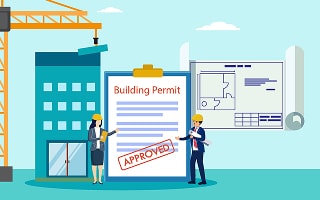
You can also contact the Grand Rapids Development Center at 1120 Monroe Avenue NW, Grand Rapids, MI 49503, to determine how properties in the city are legally permitted to be used. You will be required to provide certain key details about the property, including the number of occupied units, vacant units, and parking spaces. You can also submit a request for this information by completing a property use verification form online via the city's Citizen Access platform; however, you will need to create a user account for this option. Call the development center at 311 or (616) 456-3000 for assistance.
Grand Rapids Property Taxes
Property taxes in Grand Rapids are a crucial funding source for essential public services, including schools, law enforcement, and local infrastructure maintenance. The Grand Rapids Assessor's Office is responsible for determining the taxable value of each property in the city, while the Grand Rapids Treasurer's Office distributes tax bills and collects payments. In Grand Rapids, property is assessed annually to determine its "true cash value," and its assessed value is then set at 50% of this figure. However, the property's taxable value, the amount your tax is actually based on, is capped. This means it can only increase by a certain amount each year unless the property is sold. For each assessment year, your property's taxable value will be either the previous year's taxable value increased by a state-determined Inflation Rate Multiplier or its current assessed value if the property was sold or significantly improved.
Tax bills are typically issued in two installments: summer tax bills, which are mailed in the first week of July and due by July 31st, and winter tax bills, which are mailed by the first week of December and due by February 14th. If you miss the due date on your property tax bill, you'll be charged late fees: 1% per month on the unpaid amount for summer tax bills and 4% immediately after the due date for winter tax bills. If your taxes (summer or winter) are still unpaid by March 1st, they're handed over to the Kent County Treasurer for collection, which will also incur additional penalties and possible foreclosure of the property. The Grand Rapids Treasurer's Office provides several options for paying property taxes. These include online payments, in-person payments at the treasurer's office located at Suite 220, 300 Monroe Avenue NW, Grand Rapids, MI 49503, or via phone by calling 1-888-861-7956, option 4.
![]() Assessments
Assessments

The Grand Rapids Assessor's Office conducts annual assessments of properties in the city to determine their taxable value. This involves gathering key information like land and building size, recent real estate sales in the area, and construction costs, and then applying mass appraisal techniques to estimate the property's true cash value (market value). The property's assessed value is then set at 50% of its true cash value. However, your taxes are calculated on your property's taxable value, which is the lower of the assessed value or a capped amount that only increases by inflation. This system helps to limit annual tax increases.
If you believe your property has been unfairly assessed, you may file an appeal with the City Assessor. The assessor's office usually sets aside a specific time in February for this each year, and application forms are usually available at the office during this period. If you don't agree with the outcome of the appeal, you may escalate the issue to the local Board of Review and the Michigan Tax Tribunal.
![]() Appraisals
Appraisals

Grand Rapids assessments work similarly to appraisals. They both determine the fair value of property by comparing similar properties with others in the local area that have sold recently. In cases of odd structures or new construction, the county may call upon an appraiser to help determine the value. Estate planners, courts, and lenders also use appraisals to value real property.
![]() Tax Rates
Tax Rates

The median effective property tax rate in Grand Rapid, Michigan, is around 0.92%, which is lower than both the national median of 1.02% and the Michigan state median of 1.07%. The city's average property tax bill is $2,201, which is also slightly lower than the national average of $2,400.
Here's how Grand Rapids' tax rates compare to other counties in Michigan:
- Bay County 1.00%
- Calhoun County 1.36%
- Genesee County 0.93%
- Gogebic County 1.50%
- Ingham County 2.06%
- Macomb County 1.19%
- Muskegon County 0.47%
- Oakland County 1.37%
- Ottawa County 0.90%
- Wayne County 1.44%
![]() Exemptions
Exemptions

Even though Grand Rapids' effective tax rate is slightly lower than the national average, some residents may still find it difficult to pay their tax bills. Thankfully, the city offers several exemptions that can provide homeowners with valuable tax relief. These exemptions include:
- Principal Residence Exemption (PRE): This reduces a property's taxable value by exempting it from a portion of local school operating taxes (up to 18 mills). This is the most common tax exemption in the city and is available to anyone who owns and occupies a home (in Grand Rapids) as their legal, primary residence.
- Disabled Veterans Exemption: This is available for honorably discharged veterans with a service-related disability and their unremarried surviving spouses.
- Poverty Exemption: This is available to homeowners who have a valid PRE on file and also meet specific income and asset guidelines.
You can apply for these exemptions through the Grand Rapids Assessors' Office at 300 Monroe Avenue NW, Grand Rapids, MI 49503. You can also call 311 or (616) 456-3000 for inquiries on available exemptions.
Grand Rapids Building Permits/Inspections

Permits are required for any new construction, modifications, or system changes, mechanical, plumbing, or electrical work, to existing properties in Grand Rapids. Ordinary repairs are generally exempt, as long as the work does not affect or alter the building's structural supports, plumbing, electrical systems, or safety features. The Grand Rapids Development Center handles the city's permitting process, and you can use their Citizen Access portal to apply for permits, submit plans, and schedule inspections online. However, you'll need to create a user account. You also have the option of visiting the department at 1120 Monroe Avenue NW, Grand Rapids, MI 49503, if you prefer in-person services.
The types of permits available in Grand Rapids include:
-
Building Permits: These are required for most construction projects, including new buildings, additions, alterations, and repairs that affect the structure. Grand Rapids building permits are grouped into two main categories:
- Residential Building Permits: Issued for work involving single-family homes and duplexes.
- Commercial Building Permits: Issued for work involving commercial property or more than two residential units.
-
Trade Permits: These are required for any work that changes a building's systems. They include:
- Electrical Permits: Issued for work involving electrical systems.
- Mechanical Permits: Issued for work involving mechanical systems.
- Plumbing Permits: Issued for work involving plumbing systems.
When applying for any of these permits, you must submit the proper documentation (building plans, blueprints, contractor licenses, materials lists, etc.). You must also pay the appropriate fee.
Building inspections are part of the permit process, and they ensure that the work complies with local building and safety codes. You can schedule an inspection through the online portal or in person at the office during regular business hours.
Real Estate in the City of Grand Rapids

Famously known as "Beer City, USA," Grand Rapids is a hub for craft breweries and cultural festivals. Attractions like the Frederik Meijer Gardens & Sculpture Park, the Gerald R. Ford Presidential Museum, and the annual ArtPrize international art competition also add to the city's appeal as both a tourist and residential destination. Grand Rapids, Michigan, has a population of over 200,000, and about 84,949 housing units. Roughly 80,313 of these units are occupied, while about 4,636 are unoccupied, indicating an occupancy rate of approximately 94.5%. The city also offers a wide array of housing options, including single-family homes, historic multi-family units, and modern condos. Common housing styles in the area include Victorian, Dutch Colonial Revival, Cape Cod, Ranch, and American Foursquare homes.
The average home price in Grand Rapids, MI, is $304,040, reflecting a 1.2% increase over the past year. Note that home values can vary significantly depending on the neighborhood. Here are a few examples of average prices in different Grand Rapids neighborhoods:
- Eastgate $356,434
- Eastown $363,985
- Fuller Avenue $260,480
- Michigan Oaks $429,547
- Ridgemoor $390,850
- Shawnee Park $362,669
- South East End $280,337
The Grand Rapids, Michigan, real estate market is highly competitive. Average home prices have steadily increased year-on-year, with demand fueled by the city's strong job market and relatively affordable cost of living. Homes can go under contract in as little as 6 days, and as many as 61% of these homes sell above the asking price, highlighting the city's strong appeal to both buyers and investors.